Monday, March 3, 2014

Ten Things We'll Miss About Maryland


10. interesting people

I enjoy meeting people and hearing their stories and exchanging ideas.  Maryland is full of intelligent, pleasant people and I'm sure thankful for the many discussions we enjoyed.  There are people with fascinating jobs in DC, and people who travel a lot with the military, and people with small farms.... This was also my opportunity to hang out with the homeschooling crowd.  Since education and curriculum are some of my favourite topics, I've sure enjoyed the fact that most homeschoolers want to chat about these things!  Plus, homeschooling parents are in the thick of learning stuff with their kids, so the conversation often includes interesting tidbits on history, science, art....


9. the very cool ecosystem of marshlands and estuaries

I'm married to an ecologist.  We did a lot of hiking.  We saw beaver homes and blue herons, fish wiers and frogs, jellyfish and water snakes.  We identified tulip poplars, marsh mallow, phragmites and sweet gum.  We hiked past deer and raccoons and avoided poison ivy.  The Chesapeake is a really, really fascinating environment.  So thankful to have been able to explore it!


8. exploring DC - the gorgeous and interesting museums and galleries! 

We ran into DC again last week to squeeze in one last visit to some of our favourite spots.  Linnea and I sighed with contentment as we entered the Art Gallery again.  We got to see several paintings by Vincent Van Gogh!!!  Really!  I could have stayed there for hours.  I didn't know I loved art, but I tell you that the Art Gallery moves me.  It's like the feeling one gets after an absolutely perfect bite of chocolate right when you're totally craving chocolate.  You know? 

I stood real close, where I could almost hear the brush strokes....


7. a weekly Sunday School class for adults that challenges the brain

We're thankful for Grace Evangelical Presbyterian Church.  After each Sunday morning service, there's a big pile of snacks for everyone and then a wide assortment of classes to choose from.  Jon and I enjoyed a class on Ethics.


6. having very few commitments and many quiet evenings

We purposely stayed away from most individual outside commitments.  The majority of our evenings were free!  Jon and didn't have class prep to work on and the kids didn't have homework!  We also had less electronic distractions than before (we only had one laptop to share).  Evenings were spent reading, playing games, sketching, etc.  LOVELY. 


5. the birds!

I love east coast birds!  The osprey were such a cool part of our summer with their nest on a buoy just outside our cottage.  We ate meals on the front porch with the binoculars close at hand.  The cardinals and bluejays continue to keep us company over the winter.   I took this video last week, when a cardinal was just singing his sweet heart out in our neighbourhood.  In the background, you can hear a bunch of red-winged blackbirds.


4. history

I am so thankful that we could not only study fascinating history this year as a family, but also go and experience it.  Within a day's drive, we stood on battlefields, admired old artifacts (like George Washington's writing case and field telescope), hiked on the same hillside path as Thomas Jefferson, wandered the fort at Jamestown, sat in a stone church from the 1600s, canoed in waters once paddled by the Powhatan.... a rich experience.


3. not sharing my children or husband with many people

This is, of course, tied in with having few outside commitments.  I sure love spending lots of time with these people.  I wondered if I'd get sick of them.... nope.

We're not sick of strawberry cheesecake, either!


2. the view out our front door

Last week's sunrise, front yard....


1. being close to family

I love being 'close' to family.  My parents and Ontario sisters are nine hours away; the Florida sisters about fourteen.  This is dreamy close for us.  We spent time with all of them, and treasured every minute.  Here are a few photos from our February trip to Ontario.  (The post of our southern exploration to Florida is almost ready!)

Plenty of snow to play in!

Watching the girls in the snow.

Time with my Ontario sisters! And the
 itty babies that they are expecting!


Time with my mom!
 
Family coffee times and meal times!
Whipping up treats with my Dad!  So fun!
(By the way, if you haven't had a nanaimo bar lately, you should go get one.)


Lots of Opa and Oma time - the way it should be.


We also saw lots of other family and friends as we drove across the country and explored around here.  Such a treat!

As we pack up and prepare to leave the east coast, we just want to shout out, "What a FANTASTIC experience!  So thankful that God led us here!  Thanks to all of you wonderful Maryland people for making this a special time for our family.  We love you!!!!"


Saturday, February 22, 2014

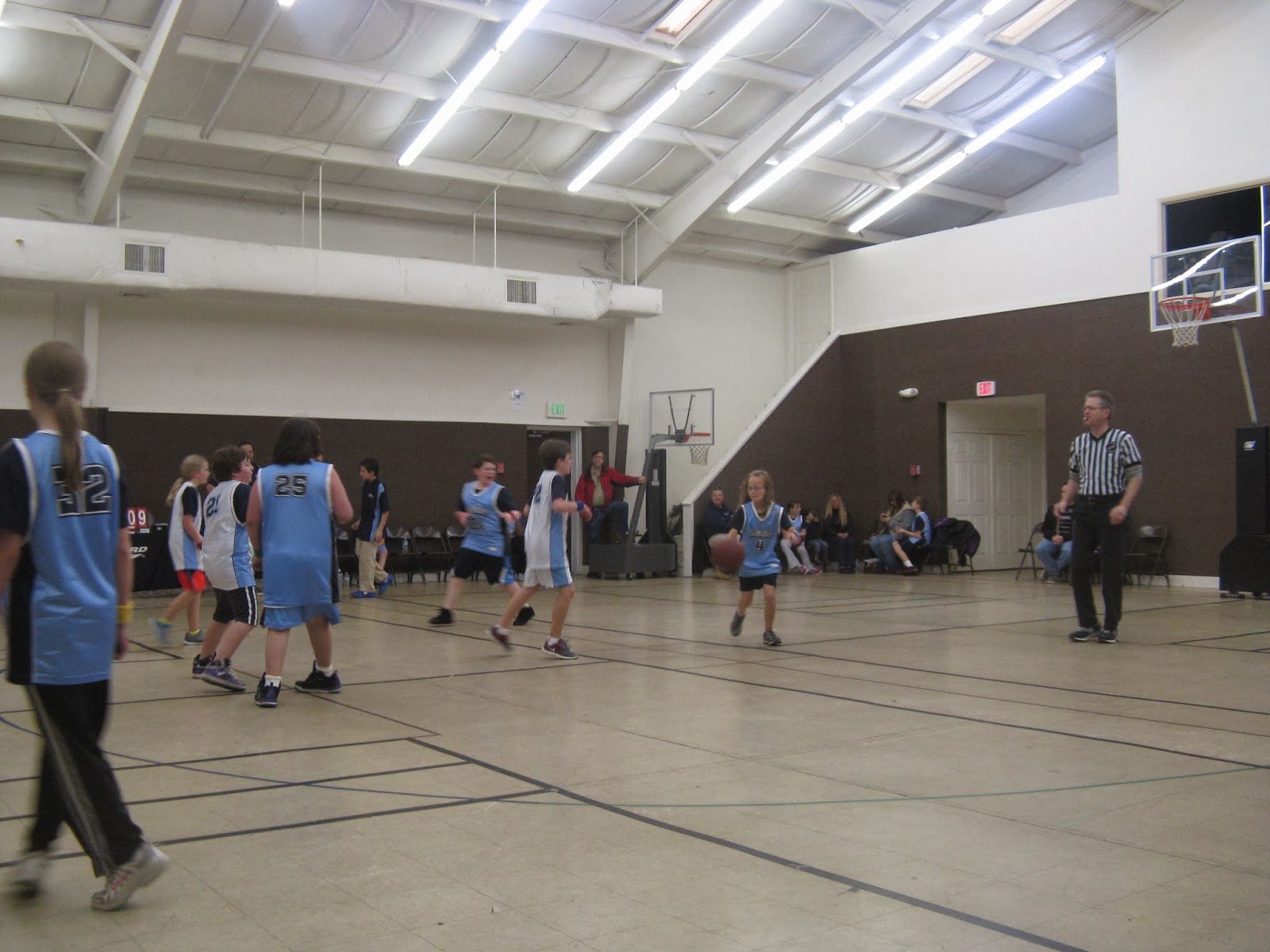
playdates and basketball - in which I Cheer At The Wrong Time


Once, when Linnea was two years old, she got really mad at her big brother.  We were in a woman's living room, enjoying a "play date" -  that is, a bunch of moms had gathered together, young children in tow, longing for fellowship.  The children were placed at one end of the room with some toys and told to play nicely.  The mothers talked at the other end, thankful to be with adults and hoping their children might behave in front of the other moms.   

Linnea was angry.  Aidan had something that she wanted (probably something that was hers to begin with) and she marched at him, said, "No, Aidan!" and grabbed the toy from him.  Now, grabbing toys from each other is a common play date practice.  Moms are constantly getting up and solving 'he-took-my-toy' disputes.  So when Linnea was aggressive, the moms all naturally looked at me because it was my turn to get up and sigh and go reprimand the grabber.  Indeed, I did jump up to be closer to the action.  But I was grinning big.  "Good job, Linnea!" I said.  "You sure told him, didn't you!  Yay!"  I gave her a hug and a hearty cheer.  When I returned to the moms, they were all staring with mouths open.

A similar thing happened last week at basketball.  We had gathered together.  The kids were told to play with the ball.  The moms wanted to chat.  And everyone was secretly hoping that their child would impress the crowd. 


At the game, as Linnea dribbled the ball down the court, the ball was stolen from her by a guy on the opposite team.  She sped up to steal it back.  She missed.  She tried again.  She blocked him a bit, she got in his way a bit, she tried harder... and then the whistle blew!   She was being called for aggressive behaviour!

 "Aw.  A foul.  It's the White team's ball now," went the murmurings around me.

But I was on my feet.  "Bravo, Linnea!  Wow!  That was great!"  I yelled from the stands.  Seriously, I had tears in my eyes.  My daughter.  Called on a foul.  I was just so proud.

Perhaps I deserved the strange looks.  But when my rule follower, my gentle, sensitive soul of a daughter pushes for something, I'm startled into exuberant praise. 

Wihoo!!  You go, Girl!


Some pre-game chatting!  We're so thankful that she's
on the same team as her friend!

PS - She also can run and run and run and not get tired.  Whose gene is that?

Friday, February 14, 2014

My Scientists


 air tainted smoke rings
windows on the second floor
science center lab


wet lab vortexer
instructions on a flip chart
acid, base, glass rod


We extracted DNA from a plant!
It was such a cool experiment, but I'm afraid I forget what the plant was...


DNA spirals
acrid tang of vinegar
explore science here


Friday, February 7, 2014

educational potential


We were browsing one day in a museum gift shop.  As we admired the items for sale, the kids came upon a calligraphy set.  It was lovely, with different nibs and tiny glass bottles of ink.  All three kids admired it for quite a while.  I agreed that it was beautiful, as were many of the items in the shop.  And then one of the children said, "But Mom.  We would use it for school.  It could be for our Afternoon Studies."

And then, the calligraphy set was no longer just an item for sale.  It held educational potential. We could study calligraphy, and fonts, and the history of ink, and natural sources for pigment, and Chinese history, and the story of parchment.....

I bought it.

My children saw that the words "It's for our Afternoon Studies" had power.  And they have often given the phrase a try!  Tickets to the Nutcracker?  It's for Afternoon Studies!  Playmobil sets of Confederate and Union soldiers? For Afternoon Studies!  Magnets?  A big bag of popsicle sticks?  A CD of African lullabies?  But of course, it would be perfect for our Afternoon Studies!  

I've even used the phrase myself, I admit, to persuade my husband.

We were planning a lengthy Afternoon Studies unit on The Netherlands, since I felt it important to learn more about the country of my parents' birth and the home of my husband's family.  I started gathering books about wooden shoes and canals and dikes.  I found websites where we could learn Dutch phrases and Dutch history.  I printed maps.  I timed our studies to correspond with the Dutch celebration of Christmas - Sinterklaas.  I had quite a few resources, but there was something missing.  Something a little more personal.....

"My dear."  I said.  "It's for Afternoon Studies.  We need to go visit my family."

And we drove up to southern Ontario to celebrate Sinterklaas with people who know how to celebrate Sinterklaas!  My parents are so wonderful! 

We played Sjoelbak, or Shuffleboard.


(I really love it that when an adorable toddler does anything,
everyone gathers 'round to watch.  So cute!)

We ate Dutch treats!  (Calories don't count when it's educational.)


We sang "Sinterklaas Kapoentje" and Mom threw pepernoten.  The kids scrambled with joy and collected big handfuls!  (I bet my parents are still finding some of those cookies under couch cushions.)


We were all given a chocolate letter!


It was so GEZELLIG!!!!!!

(That's a Dutch word meaning a cozy time, a nice atmosphere, a sense of belonging.)  Thanks to my awesome family for helping us celebrate Sinterklaas - for the sake of the children's education.  Twas noble of you.

I especially treasure our visit with my grandfather.  I absolutely love that we were able to sit at Opa's feet and hear some stories.  Stories of the tulip farm he grew up on, and stories of the Flood of '53, and of immigration to Canada and his years as a pastor in the Netherlands and in southern Ontario.. 


What a treasure.  This man is wonderful!  And we miss Oma so much.  We come from a rich, rich history and it's been a joy to have the opportunity to share this with the children. 

It's their education.


Monday, February 3, 2014

Winter - In Which The Waters Freeze and We Make Marshmallows


When we said, "We're looking forward to experiencing an East Coast winter!" Marylanders responded, "Oh, we don't get much snow here.  We tend to have mild winters."

Well, it's been mighty cold and mighty snowy here for several weeks.

First, the temperatures dropped a little below freezing and our front yard wetland became a frozen marsh.


The cold weather stuck around, and the ice started spreading across the big river.  Aidan moved out of his slightly-insulated bedroom in the porch at the side of the house, and set up camp on an upstairs bedroom floor.


Soon the whole river was ice!


And then came the snow!  And the wind!  And a deeper cold!  The landlords asked us to keep the taps dripping so that the pipes wouldn't freeze.  Our furnace burned through gallons of oil, the poor old thing.  It runs constantly.  ('Poor old thing' is soon going to be a description of us.  That's quite a heating bill.)

The first snowfall swirled with the sand of our beach in such interesting patterns, thanks to quite a blowing wind!


A snowman blew in....


And one day, when we couldn't see much past our mailbox, we declared it a snow day.


We had been wanting to make homemade marshmallows for a while, and this seemed a perfect day...

We followed this recipe: Alton Brown's Marshmallows


We got some gelatin soaking in cold water (aren't you just aching for a photo of that?) and we heated up a sweet concoction of corn syrup and sugar.  (Ah!  That should be accompanied by three photos!  Then you could see exactly how the thermometer in the pan eventually moved up to 240 degrees!)  After combining those two, our dear Kitchen Aid mixer whipped a whole lot of air into the mix (on high for fifteen minutes!).

What emerged was a sticky white liquid pile of goop that we quickly poured into a prepared 9X13 pan.  (It had to be quickly poured!  Who has time to take pictures?)  It sat overnight (we sampled a little bit here and there to make sure all was well).  The next day, we could lift out the marshmallow sheet and use scissors to cut strips.  (I will give you a picture of that, because Jon was home and his hands weren't sticky.)


The strips were cut into pieces....


Each marshmallow needed to be dusted and sifted with a little icing sugar/cornstarch so it wouldn't be too sticky.


It's sticky work!


The marshmallows are so very good!  More substantial, and yet more airy and light than store bought ones. 

You should try it!

Happy Winter, Everyone.  


Tuesday, January 21, 2014

Gettysburg

One of the best parts of homeschooling is that I get to learn so much, too.  Our studies of American History have been especially enlightening because we get to experience so much of what we're learning (and because so much of it is new to me as a Canadian!).  When we studied the native tribes of this area, we were able to visit a recreated Indian Village and study a variety of archeological finds.  When we studied the European settlers of the 1600s, we were able to visit Jamestown and St. Mary's City.  We went to old tobacco plantations, stood on ancient battlefields, walked through slaves quarters, and saw the birthplace of a U.S. president.

And when we studied the civil war, we were able to spend a day at Gettysburg.  What a powerful experience that was!  I highly recommend a visit there some day.... in the meantime, allow us to take you on a tour.


The Entrance: First We Meet Lincoln


The Visitor Center: Cyclorama

In the 1880s, a French artist named Paul Philippoteaux created a painting of the Battle of Gettysburg.  He researched the battle, talked with veterans, and spent months on the battlefield.  Then, over twelve months, he produced a detailed painting 377 feet long and 42 feet high.  (Did you catch those dimensions?  It's huge!)  The painting is displayed in a circular room at the Gettysburg Visitor Center, with a platform in the middle (where we stood) and the painting surrounding us.  The floor around the painting has been set up with dirt, rocks, grass and props to blend in with the painting.  It is incredible!  I could have stood there for hours!

Here's an example of the ground scenery leading up to the painting.
(the lighting from my flash makes the scenery and painting look less similar than they really were)

 And here's a closeup of one of the scenes in the painting.


I enjoyed learning that the artist painted himself into the painting as his signature, even though he wasn't at the battle himself... in the painting he's away from the action a bit, leaning against a tree (not shown in my photos).

It was intriguing to think that this painting has been on display for over a hundred years.  In October 1883, it was first set up in Chicago.  It toured around to eight different cities and approximately 200,000 people viewed the painting.  It was on display at the World Fair in 1933.   Here is the poster that advertised the painting.... and its ten cent entry fee.


Not only was I deeply moved by the action and stories shown in the painting, I was very aware of the fact that thousands and thousands of people have also been moved by the stories shown in the painting, including many veterans of the Gettysburg battles.  The images were so real that one veteran was quoted as saying, "You see that puff of smoke? Just wait a moment till that clears away, and I'll show you just where I stood."

Here Jon is looking at a smaller image of the cyclorama painting in a museum area that provided explanations of the different scenes.


The Visitor Center: Museum


Oh, what a museum this was!  There were plenty of artifacts from the battlefields, as well as detailed stories of each day of the Gettysburg battle.  So well done.  The museum had an excellent Junior Ranger program that helped the kids seek out really interesting tidbits and get a thorough overall mental picture of what happened here.  We saw some cannonballs that had been fired.  We saw a Bible that was lost on the field and then picked up by another soldier (both men wrote an inscription on the front pages of the Bible, and both men survived the war).  We saw photos of civilians who found themselves living in the middle of a battlefield and whose front lawns became littered with dead horses and people - civilians who transformed their living rooms and dining rooms into infirmaries.

Pictures of the exhibits didn't really work out so well.  Here's one Aidan took - the sword caught his eye.  It was all done so well!


This huge display was quite powerful: a photo collage wall of Confederate soldiers who lost their lives and a wall of Union soldiers who lost their lives.  So many youthful, earnest faces.


The Battlefield 

The battlefield is a large area of rural Pennsylvania.  You can rent a tour guide to take you around, you can purchase a CD of information to listen to as you drive, or you can take along a written guide and read information at various viewpoints.  We did the last option, which worked well for us. 

The area is very beautiful.  We went at the end of November, when nothing looks as good as it does at other times of the year.  And we found it to be peaceful and lovely.


There are hundreds of monuments around the park.  Many of them are small statues or plaques that honour specific people or battalions that fought in Gettysburg.

Some of them are quite elaborate.

Each of the kids studied one of the memorials in detail. 


This memorial showed the holding line of the battle on the last day; the farthest place that the Confederates pushed through.

This next photo is of the field in which that final battle took place.  It was called Pickett's Charge.  If you know that story at all, you know how much blood was shed on this land.  It was day three of the battle, and General Lee (i.e. the South) planned a big attack.  First he launched an artillery bombardment meant to greatly decrease the Union's ammunition.  Then 12,500 Confederate men stormed across these open fields for three quarters of a mile.  Half of them didn't make it.  The Union fired hard on the soldiers running up this field.  It was this charge that ended that battle of Gettysburg, in the Union's favor.


Little Round Top (the hill in the picture below) was the site of the fighting on Day 2 in Gettysburg.

A lot of fighting happened here.  To make the long story simple, the Confederate soldiers had had a successful Day 1.  Then here, on Day 2, the Union soldiers were mostly up on Little Round Top and the Confederates were (in part) at Devil's Den (which is where I was standing when I took the above photo).  At one point, the Confederate men surged up the hill toward Little Round Top and the Union soldiers surged down.  There was so much death - more than six hundred soldiers.  Over 1,200 were wounded.

Here is Jon standing among the rocks at Devil's Den.  These rocks are the same rocks that in 1863 provided protection for hot, tired, scared, fighting men in the middle of war.


And here's a wider view, standing on a rock up on Little Round Top, looking down at Devil's Den.  The area on the left, in the sloping area down from the trees, has been labelled the Valley of Death. 


The National Cemetery 

At first, the local farmers and civilians buried thousands of casualties wherever they could on the battlefields.  A few months later, land was set aside for a national cemetery and the bodies moved.  We went to the cemetery and walked around.  It's a beautiful, meaningful place.


(there are iron plaques throughout the cemetery quoting verses of the
poem "The Bivouac of the Dead" by Theodore O'Hara)
 
The cemetery was officially opened in November of 1863, and at the dedication ceremony Mr. Edward Everett gave a two hour speech and then President Lincoln said a few brief words.  We stood at the spot where Lincoln spoke these words, the Gettysburg Address, and we stood there at the same time of year - bare trees, pale sunshine, leaves of orange and yellow crunching under our feet. 

After all that we've learned about the civil war, I appreciate his speech as a respectful and beautifully crafted tribute: 

 Four score and seven years ago our fathers brought forth on this continent, a new nation, 
conceived in Liberty, and dedicated to the proposition that all men are created equal.  

Now we are engaged in a great civil war, testing whether that nation,
or any nation so conceived and so dedicated, can long endure. We are met
on a great battle-field of that war. We have come to dedicate a portion
of that field, as a final resting place for those who here gave their lives that that 
nation might live. It is altogether fitting and proper that we should do this. 

But, in a larger sense, we can not dedicate -- we can not consecrate -- we can not hallow -- this ground.  The brave men, living and dead, who struggled here,
have consecrated it, far above our poor power to add or detract.
The world will little note, nor long remember what we say here, but it can never forget 
what they did here. It is for us the living, rather, to be dedicated here
to the unfinished work which they who fought here have thus far so nobly advanced.
It is rather for us to be here dedicated to the great task remaining before us -- that
from these honored dead we take increased devotion to that cause
for which they gave the last full measure of devotion -- that we here
highly resolve that these dead shall not have died in vain -- that this nation,
under God, shall have a new birth of freedom -- and that government of
the people, by the people, for the people, shall not perish from the earth.

Abraham Lincoln
November 19, 1863